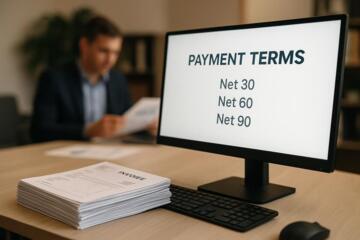
Grace Period Vs Due Date
A payment due date is the date a lender or service provider expects you to pay to avoid being marked late. A grace period is a window after a due date during which you can still pay without certain penalties, and sometimes without interest charges. The two terms often appear together on credit cards, loans, and utilities, but they do not always behave the same way across products.
For example, a credit card statement might show a “payment due date” and also describe a “grace period” for interest. If you pay by the due date, you avoid late fees. If you pay after the due date but within the grace period, you may avoid interest charges, yet you can still be reported as late depending on the issuer’s rules. That distinction matters because credit reporting and fee assessment can start at different times.
Posting time adds another layer. A payment submitted on the due date may post one or two business days later, and some systems treat the payment as received when it posts rather than when it was initiated. I’ve seen billing portals show “scheduled” payments while the account still reflects an unpaid balance until the posting timestamp—version numbers on payment apps change, but the underlying cutoff logic tends to stay conservative.
Common Confusions And Traps
People often treat grace period as a universal “late is fine” buffer. In practice, grace periods usually target interest accrual, not late-fee assessment or credit reporting. A lender can charge a late fee even while interest is paused, and it can report delinquency even if interest is not yet accruing.
Another confusion comes from mixing up due dates across billing cycles. Credit cards use statement due dates tied to a specific statement period, while some loans use contractual monthly due dates tied to the loan account. Utilities may use a due date for service billing and a separate cutoff date for disconnection. Each date can trigger different consequences, and the terms are not interchangeable.
Supporting systems drive these outcomes. Payment processors, bank transfer rails (ACH, wire), and internal posting rules determine when a payment is considered received. Many issuers also apply time-zone and business-day rules, so a payment initiated late in the day can miss the same-day processing window. In one case I reviewed for a household budget spreadsheet (I used a simple Google Sheets model with a “business days” function), the difference between calendar days and business days shifted the risk window by two days.
Finally, consumers sometimes rely on autopay without checking the funding source and cutoff. Autopay can be set to pay the “minimum due” or “statement balance,” and the amount can change if the statement changes. If the payment method fails due to insufficient funds, the account may still be marked late even though autopay was enabled.
How To Plan Payments
Read The Exact Terms
Start with the billing agreement or the statement disclosures for your specific product. Look for language that separates late fees, interest charges, and credit reporting. If the document says interest is waived if you pay by a certain date, that describes interest behavior, not necessarily late-fee or reporting behavior.
On many credit cards, the “grace period” refers to interest on new purchases when you pay the statement balance in full by the due date. If you carry a balance, interest may start immediately on purchases even if a grace period exists for certain amounts. For loans, grace periods may refer to deferment or a short window after a missed payment, but those are not the same as a routine grace period on every billing cycle.
When the statement shows both a due date and a “grace period” note, treat the due date as the risk boundary for late fees and reporting until you confirm otherwise.
Account For Posting Delays
Plan around how payments post. If you pay by bank transfer, assume a processing lag between initiation and posting. A practical rule is to schedule payment at least 3–5 business days before the due date for ACH-style transfers, and earlier if the provider is known to batch postings.
Check the payment status in the portal and watch for a “received” or “posted” indicator. Some systems show “processing” for several days, and the account balance may not update until the posting event. I’ve noticed that payment confirmations in apps can show a timestamp that does not match the posting date on the account ledger, which is why you should track the ledger, not just the confirmation screen.
If you need to pay urgently, ask whether a wire transfer posts faster for your provider. Wire rails often settle faster than ACH, but fees and availability vary by bank and lender.
Use Autopay With Checks
Autopay reduces missed payments, but it does not remove timing risk. Verify the autopay schedule relative to the due date and confirm the payment amount rule (minimum due versus statement balance). If the account uses “minimum due,” paying only the minimum can still trigger interest charges on credit cards, even when late fees are avoided.
Set a calendar reminder for a second check: one day before the due date, confirm that the payment is scheduled and that the funding account has sufficient available balance. If your bank uses “available balance” that differs from “current balance,” use the available figure for risk planning.
For households with variable income, consider a buffer in the funding account. A failed autopay due to a temporary hold can lead to a late mark even if you cover the balance immediately afterward.
Act Fast After A Miss
If you miss the due date, contact the provider quickly. Ask whether the account will be assessed late fees and whether the delinquency will be reported to credit bureaus. Some providers can reverse a late fee if you have a history of on-time payments, but the reversal is not automatic and depends on their policies.
Make the payment as soon as possible and keep proof of initiation. If you paid by bank transfer, save the confirmation number and the initiation timestamp. If you paid by check, note the check date and any tracking details.
Do not assume grace period language protects you from credit reporting. Credit reporting rules depend on the creditor’s reporting practices and the status of the account, which can change quickly after the due date.
Educational Case Examples
Credit Card Statement Timing
Jordan’s credit card statement shows a payment due date of May 15. The card disclosure mentions a grace period for interest on purchases when the statement balance is paid in full by the due date. Jordan schedules a payment on May 15, but the bank posts it on May 17.
Jordan avoids an interest charge on purchases only if the issuer treats the payment as received by the due date for interest purposes. Separately, the account may still be marked late for late-fee and credit reporting if the issuer posts after the due date. Jordan checks the account ledger after posting and reviews the next statement for any late fee line item and any “past due” status.
Loan Or Utility Billing Dates
Sam pays a small personal loan through a monthly autopay setup. The loan agreement lists a due date on the 1st of each month. Sam’s bank shows the autopay withdrawal on the 1st, but a holiday causes the withdrawal to post on the 2nd.
The loan servicer’s system may treat the payment as received on the posting date. If the servicer’s cutoff is strict, Sam could see a “late” status even though autopay ran. Sam reduces this risk by moving autopay to the last business day of the previous month and confirming the next withdrawal date in the bank app (I’ve seen people forget that some apps label schedules with a different month view).
Comparison Checklist
| Item | Grace Period | Payment Due Date | What To Watch |
|---|---|---|---|
| Main purpose | Often delays interest charges | Avoids late status and fees | Late fees and reporting can start at due date |
| Timing trigger | After due date, within a window | A specific calendar date | Posting date may matter more than initiation date |
| Credit reporting risk | Not guaranteed to be protected | May trigger delinquency status | Ask the issuer how they report late payments |
| Best consumer action | Use as a last-resort buffer only | Treat as the deadline for risk control | Schedule 3–5 business days early when possible |
Step-by-step decision support:
- Find the exact due date on the statement or bill, then mark it in your calendar as the “late-fee risk boundary.”
- Read the disclosure line that defines grace period and identify whether it covers interest only or also covers late fees and reporting.
- Schedule payment early enough to cover posting delays; for bank transfers, plan 3–5 business days before the due date.
- Confirm the payment status after it posts by checking the account ledger, not only the payment confirmation screen.
- If you miss the due date, pay immediately and ask whether the late fee and credit reporting will apply.
Common Mistakes To Avoid
One frequent mistake is paying on the due date and assuming the grace period covers everything. Even when interest is paused, late fees and delinquency reporting can still occur if the payment posts after the due date.
Another mistake is relying on “scheduled” autopay without checking the funding account’s available balance. Temporary holds, overdraft protection rules, or timing differences between paycheck deposits and bill withdrawals can cause a failed payment.
People also misread multiple dates on the same statement. A statement may show a due date, a cutoff for interest, and a separate cutoff for cash advances or promotional balances. Treat each date as a separate rule, not as a single deadline.
Finally, consumers sometimes wait too long to contact the provider after a miss. Many systems update delinquency status quickly, and late-fee reversal requests become harder once the account has moved through internal processing.
FAQ
Does A Grace Period Prevent Late Fees?
Grace periods often address interest charges, not late fees. Your agreement or statement terms should specify whether late fees apply after the due date even if a grace period exists.
Will Paying During Grace Avoid Credit Reporting?
Credit reporting depends on the creditor’s reporting practices and the account’s delinquency status. Grace period language for interest does not guarantee that reporting will be avoided.
What Counts As “On Time” For A Payment?
Many providers treat the posting date on the account ledger as the received date. Initiation time can differ from posting time, especially for bank transfers and weekends.
How Early Should I Schedule Payment?
For bank transfer payments, scheduling 3–5 business days before the due date reduces posting-delay risk. If your provider batches postings, schedule earlier.
What Should I Do If Autopay Fails?
Pay immediately and contact the provider to ask about late fees and reporting. Keep proof of payment initiation and ask whether a reversal is possible based on your account history.
Author's Insight
Grace period and due date terms look similar on statements, but they often govern different penalty types. The most reliable approach is to treat the due date as the deadline for late status and to read the disclosure that defines what the grace period covers, usually interest on certain balances. Posting delays can shift outcomes even when you schedule payment on time, so checking the account ledger after posting matters. When a payment is missed, the fastest path to reduced harm is immediate payment plus a direct question about late fees and credit reporting.
Key Takeaways
- Due date is the risk boundary for late status; grace period often targets interest charges.
- Grace period language does not automatically protect against late fees or credit reporting.
- Posting date can differ from payment initiation date, so schedule early and verify ledger updates.
- If autopay fails or a payment posts late, pay immediately and ask the provider about fee reversal and reporting.