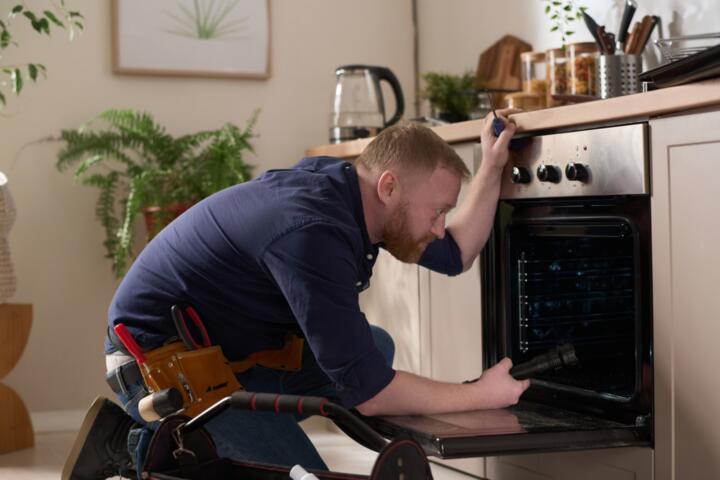
Repair Vs Replacement Basics
Repair fixes a specific failure mode in an existing product, while replacement swaps the whole unit for a new or refurbished one. The decision matters because repair can restore function without changing the product’s age, wear history, or software support status, while replacement resets those factors but introduces new costs and disposal steps.
Two measurable facts often guide the math. First, many warranties cover parts and labor for a defined period (commonly 1–5 years for consumer electronics, though terms vary), so a repair inside the warranty window can shift cost from the consumer to the manufacturer or authorized service. Second, repair parts availability can be time-limited; in the EU, the Ecodesign framework has pushed manufacturers toward providing spare parts for certain categories, but the exact duration depends on product type and regulation scope.
In practice, repair usually involves diagnosing the fault, replacing components, testing safety-critical functions, and documenting the work. Replacement usually involves verifying compatibility (power, connectors, mounting, firmware), transferring settings when possible, and confirming that the new unit meets the same performance requirements. A small aside from real consumer workflows: many people skip the “what exactly failed?” step and jump straight to pricing, which makes later comparisons less accurate.
Main Problems And Pain Points
People often treat repair and replacement as identical in outcome, even though they differ in what gets reset. Repair targets one issue, so other latent wear can remain. Replacement resets the whole system, but it can introduce new failure risks tied to manufacturing variation, different component batches, or different usage patterns.
Cost comparisons also go wrong when they ignore total time and secondary effects. A repair may require downtime, shipping, or appointment scheduling; a replacement may require setup, re-pairing devices, or reconfiguring accounts. If a product supports software features, replacement can change the update path, and a repair may not restore lost functionality if the limitation is software-side rather than hardware-side.
Biological mechanisms matter when the product affects health. For example, a malfunctioning air purifier can reduce filtration performance, which can worsen exposure to airborne particles; a refrigerator with a failing seal can increase spoilage risk and foodborne illness exposure. In those cases, the “repair vs replacement” choice changes exposure pathways, not just convenience.
Supporting technologies influence the decision. Diagnostics might rely on built-in error codes, service tools, or third-party meters; repair feasibility depends on whether the failed component is accessible and whether calibration is required. Replacement feasibility depends on whether the product’s interfaces are standardized and whether the new unit can be integrated into existing systems.
A common dependency is warranty coverage. If the product is still under warranty, repair may be cheaper, but only authorized service may preserve coverage. If the product is out of warranty, repair costs can rise quickly when labor time is high, and replacement can become more predictable.
Solutions And Advice
Start With A Clear Failure Description
Write down what changed: when the problem started, any error codes, what still works, and what stopped. This helps because repair estimates depend on the specific failure mode, not the symptom alone. In practice, you can capture a short timeline and a photo of labels or model numbers; many service forms ask for both.
Why it works: a precise description reduces diagnostic hours and prevents replacing parts that do not address the root cause. What it looks like: “Fan runs but no cooling after 10 minutes; error E12 appears” beats “it stopped working.” A mild frustration many consumers face: the first call often asks for the same details again, so having them ready saves time.
Compare Costs Using Total Downtime
Estimate not only the repair price or replacement price, but also the cost of downtime. For a device used daily, downtime can force workarounds that carry their own costs, such as buying temporary alternatives or losing productivity. If a repair takes 2–3 weeks for parts, the comparison should include that delay.
Why it works: time affects real-world value, especially for products tied to safety or food storage. What it looks like: you track the repair lead time quoted by the shop and compare it to the delivery time for a replacement unit. A practical number: if a replacement arrives in 3–5 days and a repair is quoted at 15–20 business days, the “time premium” can outweigh a small price difference.
Check Warranty, Service Policy, And Parts Availability
Confirm whether the warranty covers the likely failure and whether you must use authorized service. Then ask about parts availability and whether the shop can order the exact part number. This matters because some repairs are impossible without specific components or calibration tools.
Why it works: warranty terms and parts lead times change the economics. What it looks like: you request a written quote that lists the part(s), labor hours, and expected turnaround. A small aside: service portals sometimes show “in stock” for a part, but the shop may still need 1–2 extra days to schedule labor, which rarely appears in online listings.
Assess Safety And Health Impact First
If the product affects health—air quality, water safety, food storage, or medical-adjacent use—prioritize restoring safe performance. Repair can be appropriate when it restores the failing function and the service includes testing, but replacement may be safer when the failure is hard to verify or involves multiple subsystems.
Why it works: health risks depend on performance, not on whether the product is “newer.” What it looks like: you ask the service provider what tests they run (for example, airflow verification for an air device, seal pressure checks for refrigeration, or leak checks for water-related equipment). If the shop cannot describe testing, replacement often becomes the more defensible choice.
Evaluate Performance After Repair Versus Replacement
Ask what “fixed” means in measurable terms. For electronics, that can be restoring output within a tolerance; for appliances, it can be temperature or airflow targets. For software-dependent products, confirm whether replacement changes firmware support or feature access.
Why it works: some failures are symptoms of broader degradation, such as battery wear, sensor drift, or failing power regulation. What it looks like: you request a post-repair test result or at least a checklist the technician follows. A concrete example: if a battery replacement is offered, ask for the battery capacity rating and whether the device’s battery health reporting returns to expected ranges.
Use A Decision Threshold For Repeat Failures
Set a rule for when repeated repairs justify replacement. A common approach is to compare the cumulative repair cost over a defined period (for example, 12 months) against the replacement cost, then factor in whether the same subsystem keeps failing.
Why it works: repeated failures suggest underlying design limits, wear patterns, or compatibility issues. What it looks like: you track each repair’s cause and whether the same component family is involved. Mild opinion: many repair invoices list “part replaced” but not the failure mechanism, which makes it harder to judge whether you’re paying for the same problem twice.
Plan For Data, Settings, And Compatibility
Before repair or replacement, back up settings and data where possible. For devices with accounts, confirm whether you can transfer pairing, licenses, or configuration profiles. This matters because replacement can break integrations, while repair can preserve them.
Why it works: the “hidden cost” is often setup time and loss of configuration. What it looks like: you export settings, note Wi‑Fi network names, and record firmware versions; a small aside, I’ve seen people forget the firmware version on a router-like device, then spend hours troubleshooting after a replacement because behavior changed.
Case Examples
Air Purifier With Reduced Airflow
An anonymized household reports that an air purifier runs but seems weaker after 6 months. The user notices a persistent filter-change indicator and a faint burning smell. The service shop inspects the fan, checks for obstructions, and verifies airflow using the device’s diagnostic mode; they replace a clogged fan assembly and confirm the indicator resets after testing.
Repair is chosen because the failure is localized and testing shows airflow returns to expected behavior. Replacement would become more likely if the smell indicates electrical damage that cannot be verified as safe, or if the fan failure recurs after multiple repairs.
Refrigerator Seal Failure And Food Safety
An anonymized scenario involves a refrigerator that warms slightly in the top compartment and leaves condensation around the door. The owner finds a worn door gasket and a loose hinge alignment. The repair includes gasket replacement and a door seal test, then a temperature check over a short period.
Repair is selected because the issue affects a measurable safety pathway—temperature maintenance—and the shop can verify the seal and temperature behavior. Replacement becomes more defensible if the compressor or control board shows signs of repeated faults, since those failures can be harder to confirm and can lead to spoilage risk.
Repair Vs Replacement Checklist
| Decision Factor | Repair Tends To Fit When | Replacement Tends To Fit When | What To Ask |
|---|---|---|---|
| Warranty status | Failure is covered and authorized service is used | Warranty is expired or coverage excludes the likely cause | Which parts and labor are covered, and who must perform the work? |
| Lead time | Parts are available quickly, turnaround is short | Repair takes weeks and the product affects safety or daily needs | What is the earliest realistic date, and what happens if parts arrive late? |
| Verification tests | Service can test performance after repair | Failure involves multiple subsystems or cannot be verified safely | What measurements or checks confirm the fix? |
| Repeat failures | A single component family caused the issue | Same subsystem fails again after repair | What failure mechanism caused it, and what prevents recurrence? |
| Software support | Repair restores hardware and software remains supported | Replacement changes support status or restores lost features | Does the new unit receive updates for a defined period, and what features change? |
Use this step-by-step checklist before you approve work: (1) record the failure description and model number, (2) get a written repair quote with parts and labor, (3) ask for post-repair testing details, (4) compare total cost including downtime, (5) check warranty and authorized-service requirements, (6) set a repeat-failure threshold, and (7) plan data and settings transfer.
Common Mistakes
One mistake is comparing repair and replacement using only the sticker price. A repair quote that excludes shipping, diagnostic fees, or follow-up labor can look cheaper until the final invoice arrives.
Another mistake is accepting vague diagnoses like “needs a new board” without a failure mechanism. When the shop cannot explain why the board failed, the risk of repeat failure rises, and the repair becomes closer to guesswork.
People also skip verification. If a service replaces a component but cannot describe how they confirm performance, you may end up paying again for the same underlying issue.
Consumers sometimes ignore compatibility and setup costs. A replacement air device might require different filter models, and a replacement appliance might need a different installation clearance, which can affect performance and safety.
A mild frustration: paperwork often arrives late. If you approve repair by phone, ask for the written scope before work begins, because labor hours and parts lists sometimes change after diagnosis.
FAQ
How do I compare repair and replacement costs?
Add the repair price to shipping, diagnostic fees, and downtime costs, then compare against the replacement price plus setup time and any required accessories. Use the same time window for both options, such as 12 months.
When does a repair become a bad deal?
Repair becomes a bad deal when cumulative repair costs over a defined period approach replacement cost, when the same subsystem fails again, or when the service cannot describe post-repair testing.
What questions should I ask a repair shop?
Ask for the specific part numbers, labor hours, warranty on the repair, expected turnaround time, and the exact tests or measurements used to confirm the fix.
Does replacing a product affect health-related performance?
Yes, because performance drives exposure. Replacement can restore correct airflow, temperature control, or filtration, but only if the new unit is correctly installed and meets the same specifications as the old one.
Can I repair a product if it is out of warranty?
Yes, but you should confirm parts availability, request a written quote, and check whether the repair shop offers a warranty on labor and parts. If the diagnosis is uncertain, ask whether they charge for re-diagnosis.
Author's Insight
Repair and replacement differ in what they reset: repair resets a targeted component or subsystem, while replacement resets the full unit’s age and support path. Decision quality improves when you demand measurable verification after repair and when you compare total cost including downtime. I also notice consumers underestimate setup and compatibility work, which can erase savings from a cheaper repair. A practical approach is to treat the repair quote as a testable plan with parts, labor hours, and post-work checks, then compare it to replacement using the same performance criteria.
Key Takeaways
- Repair targets a specific failure mode; replacement resets the whole unit and its wear history.
- Use total cost comparisons that include downtime, shipping, setup, and any required accessories.
- Ask for post-repair verification tests, especially for products tied to health-related performance.
- Warranty status and parts availability often decide the economics more than the symptom alone.
- Set a repeat-failure threshold so repeated repairs trigger a rational replacement decision.